Montana Geography & Our Story
What Is the Hi-Line in Montana?The Region Behind The Hi-Line Co. Name
Before the Hi-Line became part of our company name, it was a place. Understanding that place helps explain the history behind The Hi-Line Co. and the responsibility we attach to its name.
The Region at a Glance
What Is Montana’s Hi-Line?
The Hi-Line is a region of northern Montana associated with the former Great Northern Railway and the communities along U.S. Highway 2. It is known for its open prairie, agricultural country, small towns, and long east-west connections near the Canadian border.
A common geographic description runs from the Rocky Mountain Front east toward the North Dakota border. The term describes a region and a sense of place, not a single town or a boundary with one universally agreed definition.
Across Northern Montana
Where Is the Hi-Line?
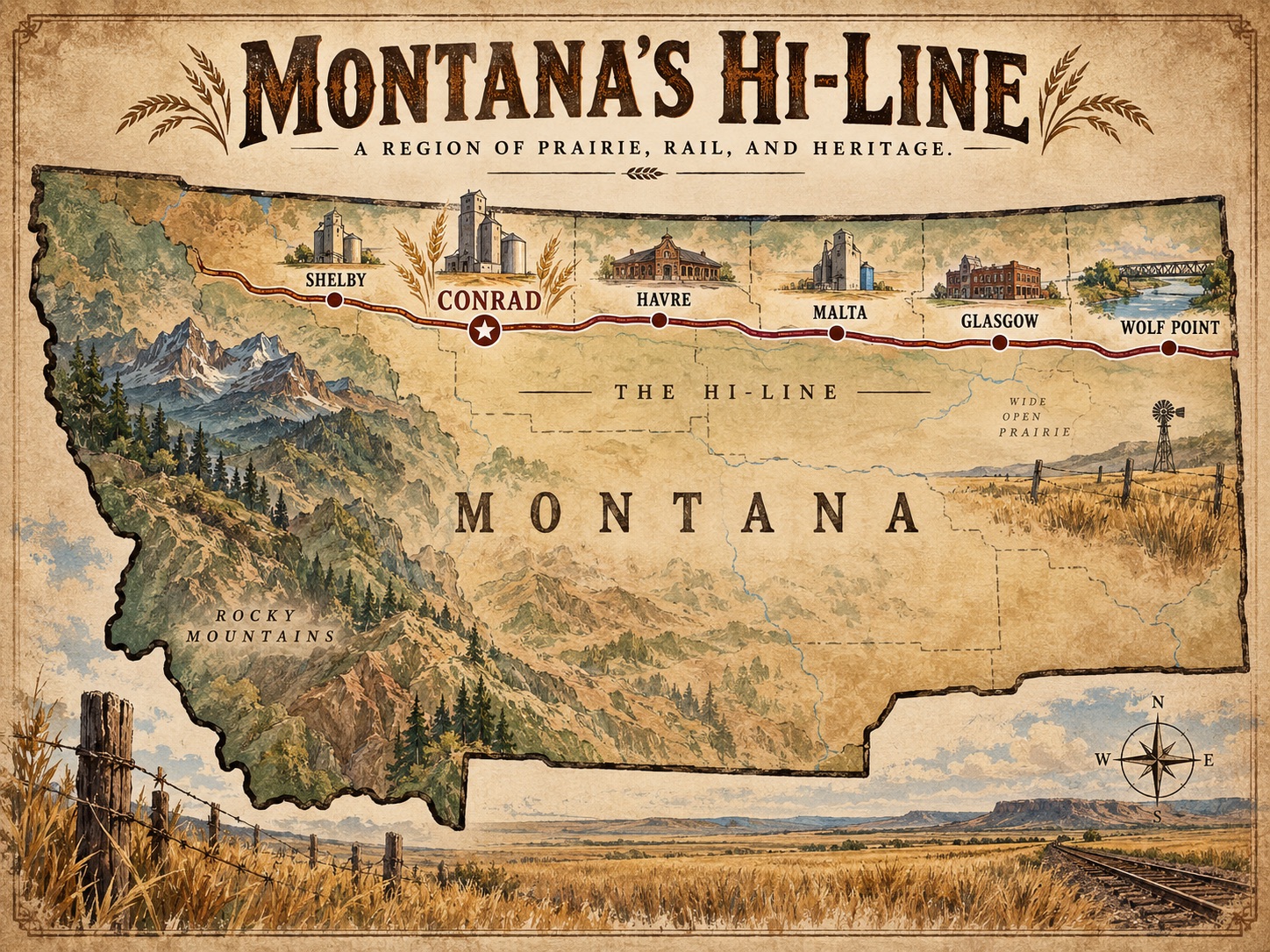
On a Montana map, look for U.S. Highway 2 running across the northern part of the state. The highway and railway connect a succession of communities through prairie and agricultural country. The Milk River is another important geographic feature along portions of the corridor.
Shelby, Havre, Chinook, Malta, Glasgow, and Wolf Point are among the towns commonly associated with the Hi-Line. Each has its own story; together they help make the regional name recognizable.
A few communities along the corridor, from west to east
- Shelby Havre
- Chinook Malta
- Glasgow Wolf Point
Prairie, Rail & Heritage
An illustrated tribute to Montana’s Hi-Line, with Conrad highlighted
for its place in The Hi-Line Co.’s heritage.
Railroad usage can be broader than this plains-focused description. BNSF also uses the Hi-Line name for its route across Marias Pass near Glacier National Park. That is why an account of the railway and an account of the geographic region may describe different stretches of northern Montana.
The Name Came From the Railway
Why Is It Called the Hi-Line?
The regional name grew out of the Great Northern Railway. Its transcontinental route crossed the northern United States, linking the Upper Midwest with the Pacific Northwest. Over time, the Hi-Line name came to describe the communities and country around that northern rail corridor.
The key idea is north, rather than high elevation. The Great Northern followed the northernmost transcontinental railway route in the United States. The name is not a claim that this is the highest part of Montana.
The Great Northern completed its transcontinental project in 1893. Rail connections helped shape the development of communities such as Havre and linked northern Montana to places far beyond the state. Today, BNSF freight trains and Amtrak’s Empire Builder keep rail transportation part of the corridor’s daily life.
You may see the name written as “High Line,” but Hi-Line is the spelling used by Montana visitor resources and by our company.
More Than the Road Between Towns
A Working Landscape With a Longer History
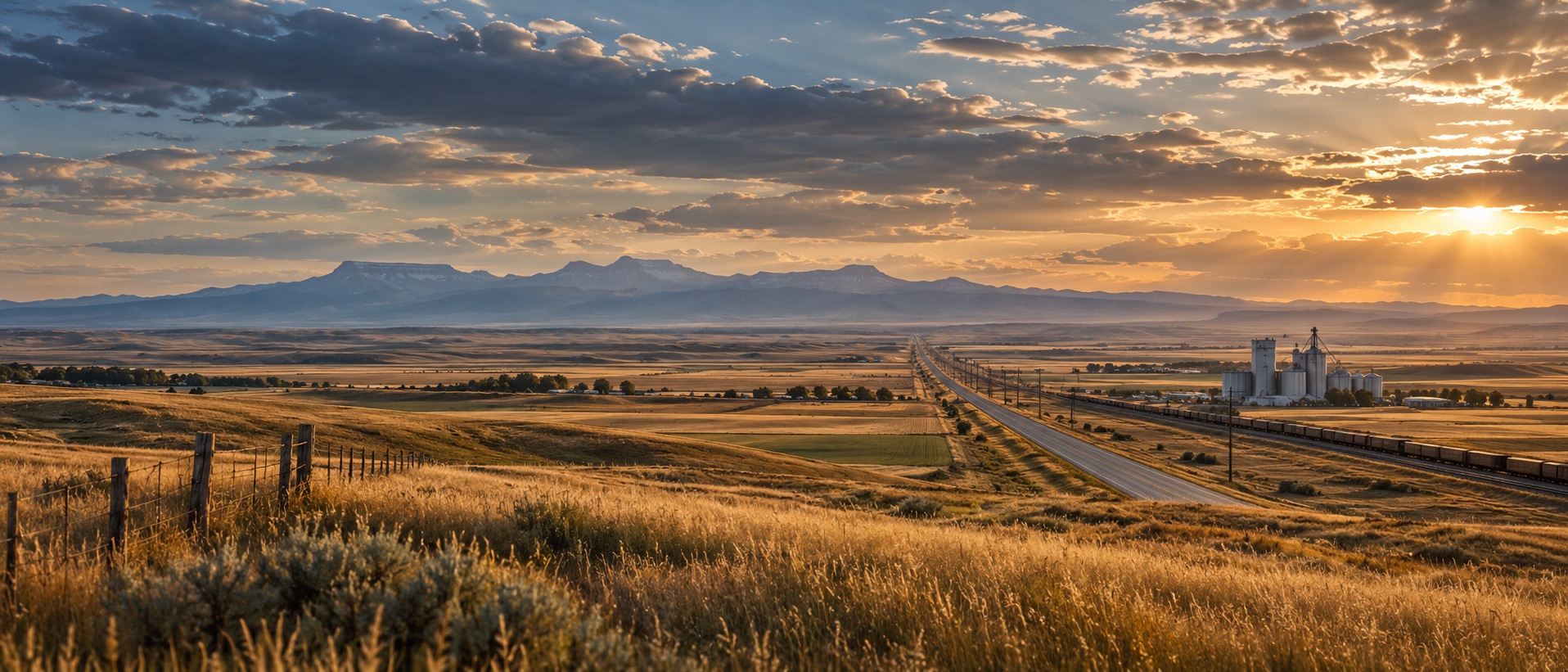
Much of the Hi-Line is a different Montana landscape from the mountain valleys that often fill travel photographs. Prairie, grain fields, rangeland, and broad horizons are central to its identity. A grain elevator beside the railway is a reminder that this is working country, where land and transportation have long been connected.
Agriculture and Small-Town Connections
Farming, ranching, grain storage, and shipping are part of the region’s story. Ethridge, between Cut Bank and Shelby, is one example of a community whose history is closely tied to storing and shipping grain. The railway was not simply something passing through; it helped connect local work with wider markets.
History Before the Railway
The railroad gave the region a widely used name, not the beginning of its history. Indigenous peoples’ relationships with this land long predate the tracks. Blackfeet country near the Rocky Mountain Front and the Fort Belknap and Fort Peck communities farther east are part of northern Montana’s living geography and history.
There is no single story that represents everyone along the Hi-Line. Its identity includes distinct Tribal nations, agricultural communities, railroad history, and the people who continue to make their lives here. Appreciating the region means leaving room for those different histories.
The Place Behind Our Name
How the Hi-Line Became Part of Our Story
The Hi-Line Co. began in 2020 with cultivation operations in Conrad and a first dispensary in Ronan. Our earlier work in hemp and CBD helped shape the kind of company we wanted to build: locally accountable and focused on the long term.
The name emerged during a conversation on a pile of wood at Colby’s ranch. Chuck suggested The Hi-Line Company, connecting the business to the team’s northern Montana roots and cultivation story.
For us, the name carries a connection to a real place and a responsibility to the people around us. It should mean something in the way we work, not only in the way we introduce ourselves.
Two Places in One Company History
Conrad, Ronan, and Our Montana Roots
Conrad connects our early cultivation story to north-central Montana’s agricultural country. Ronan, in Western Montana’s Mission Valley, was our first retail community. Both places matter to our history, but they are not interchangeable geographic labels.
Ronan is not on the U.S. Highway 2 corridor described here. Our company name reflects our northern Montana roots; it does not mean that every community in our company’s story is located on the Hi-Line.
A Name to Live Up To
What That Connection Means to Us
As multigenerational Montanans, we carry a relationship with this state that began before the company did. Family and community shaped our expectations: do honest work, take responsibility, look after the places you depend on, and consider the people who come after you.
We do not claim that everyone from the Hi-Line thinks alike, or that those values belong only to one region. They are the standards we bring to our own work. Our name reminds us to stay accountable to them as the business grows.
A place gave us our name. Our work has to give that name meaning.
Frequently Asked Questions
Montana’s Hi-Line: Geography, History, and Our Name