Cannabis Education
What Are Terpenes? A Clear Guide for Cannabis Shoppers
Terpenes are aromatic compounds found in cannabis and many other plants. They help create familiar scents and flavors, from citrus and pine to floral, earthy, and peppery notes.
Terpene names show up in dispensary conversations, certificates of analysis, product descriptions, and sometimes directly on cannabis labels. Names such as myrcene or limonene may be unfamiliar, even when the aromas they describe are easy to recognize.
This guide explains the names you may encounter, how they relate to aroma and flavor, and where terpene information fits alongside cannabinoid amounts and other label details.
The goal is a clearer understanding of the product profile.
Quick Answer
What Are Cannabis Terpenes?
Terpenes contribute to cannabis aroma and flavor. They are chemically different from cannabinoids such as THC and CBD: a terpene profile describes aromatic compounds, while cannabinoid information reports a different part of the product’s composition. Read the two together to understand what the label is describing.
Useful For
Aroma & Flavor
Terpenes help explain why one cannabis product may smell citrusy, piney, earthy, floral, spicy, or herbal.
Keep Separate
Terpenes & Potency
Terpene content is not the same thing as THC or CBD potency. Read cannabinoid amounts separately.
Read Together
The Full Profile
A terpene profile lists the aromatic compounds reported for a product. Read it alongside cannabinoid amounts and product format.
Aroma Vocabulary
Six Terpenes You May See in Cannabis
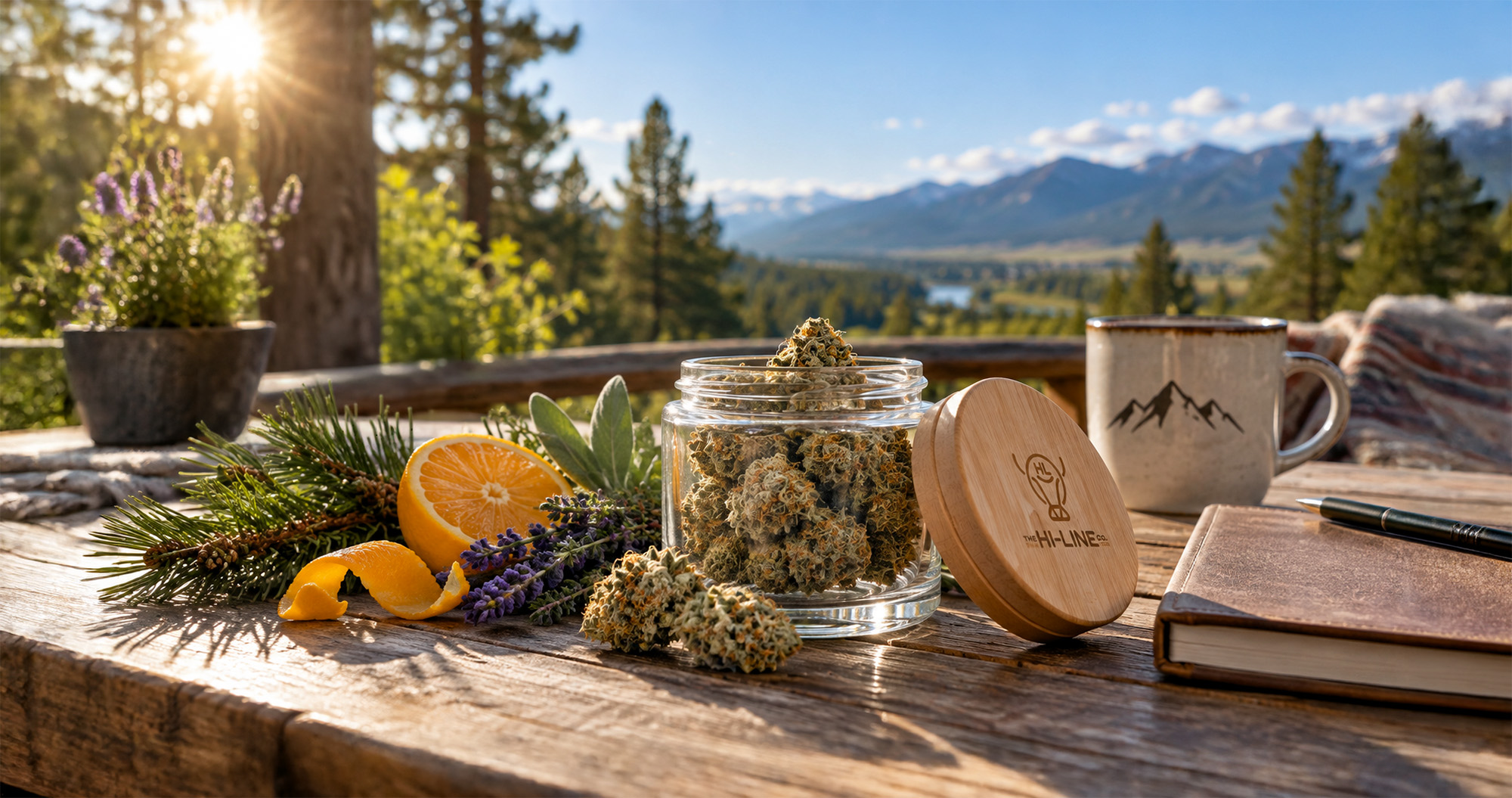
Think of familiar scents such as citrus peel, pine, lavender, and black pepper. That everyday aroma vocabulary makes the terpene names below easier to understand.
Myrcene
Musky, Earthy & Fruity
Myrcene is often described with musky, earthy, fruity, and softly herbal aroma notes.
Limonene
Citrus & Bright
Limonene is associated with lemon- and orange-like citrus aromas and a sweet citrus character.
Alpha-Pinene
Piney & Resinous
Alpha-pinene brings the pine and resin notes its name suggests, often with a sharp woody edge.
Linalool
Floral & Lavender-Like
Linalool is commonly described as floral and lavender-like, sometimes with lightly spicy notes.
Beta-Caryophyllene
Spicy, Peppery & Woody
Beta-caryophyllene is often described with spicy, peppery, woody, or clove-like notes.
Terpinolene
Floral, Herbal & Citrus
Terpinolene can combine floral, herbal, citrus, and fresh woody notes in the same aroma profile.
Keep the Categories Clear
Terpenes & Cannabinoids
Are Different Parts of the Profile
THC, CBD, and terpenes can all appear in the same cannabis product, but they answer different questions.
Terpenes
Aroma & Chemical Character
Terpenes help describe the volatile, aromatic side of the product profile.
- Examples: myrcene, limonene, pinene, linalool
- Useful for comparing aroma and profile differences
- Not a substitute for THC or CBD information
Cannabinoids
THC, CBD & Related Compounds
Cannabinoids are a different group of compounds, including THC and CBD.
- Examples: THC, CBD, CBG, CBC
- Read actual cannabinoid amounts or percentages
- Do not infer potency from terpene percentage
Beyond the Name
Why the Actual Profile Can Tell You More Than “Indica” or “Sativa”
Commercial cannabis is commonly organized with familiar labels such as indica, hybrid, sativa, and strain names. Those labels can make a menu easier to browse, but they do not consistently map to the underlying chemical profile.
A 2022 study in PLOS ONE analyzed commercial cannabis samples from six U.S. states and found that the common indica/hybrid/sativa labeling system did not reliably capture the observed cannabinoid and terpene diversity. Researchers also found variable chemical consistency among products sharing the same strain name.
That does not make strain names useless. It means they work best as one piece of product language. When terpene and cannabinoid information is available, it gives you more direct information about the specific product or batch in front of you.
What the Research Can—and Cannot—Say
Do Terpenes Determine How Cannabis Feels?
Not in a way that supports simple one-terpene promises. Researchers continue to study how terpenes, cannabinoids, and other cannabis compounds may interact, including the idea commonly called the “entourage effect.” A 2024 systematic review in Pharmaceuticals concluded that additive or synergistic enhancement between terpenes and cannabinoids remains unproven and needs better clinical research.
Terpenes are useful context for comparison, but current research does not support treating one terpene, one percentage, or one commercial strain name as a guaranteed predictor of a person’s experience.
Practical Product Reading
How to Read Terpene Information
Without Overthinking It
Use the profile to add context, not to replace the rest of the label.
01
Look at the Profile, Not Just One Terpene
Cannabis contains mixtures of aromatic compounds. Looking at several reported terpenes provides more context than treating one name as the whole story.
02
Use Aroma Vocabulary as the Clearest Starting Point
Look for familiar descriptions such as citrus, pine, floral, earthy, herbal, and spicy. These words help translate the names in a product description or testing report.
03
Read THC & CBD Separately
A product can have a distinctive terpene profile at many different cannabinoid levels. Terpene percentage is not a replacement for cannabinoid potency.
04
Compare the Specific Product or Batch
When test information is available, use the actual product data rather than assuming every item with the same strain name has an identical profile.
Montana Product Information
Where Terpene Information May Show Up
Montana Department of Revenue guidance says regulated marijuana products must include a QR code linked to the product’s certificate of analysis. The COA may include a terpene profile when applicable, and certain product labels or facts panels may include marketed terpene information.
That does not mean every product will display the same terpene detail. If you want to compare profiles, check the label and QR-linked testing information for the specific product, then ask for clarification if the terminology is unfamiliar.
Keep the Language Honest
Four Terpene Shortcuts Worth Avoiding
“Myrcene Means Sleepy.”
That claim turns a commonly marketed association into a prediction. The current evidence is not strong enough for that shortcut.
“Limonene Means Energetic.”
Limonene gives useful citrus aroma information. It should not be treated as a guaranteed mood or energy label.
“More Terpenes Means Better Cannabis.”
A larger terpene number is descriptive, not a universal quality score. Freshness, cultivation, format, cannabinoid content, storage, and personal preference are separate considerations.
“Indica or Sativa Tells Me the Terpene Profile.”
Those commercial labels do not reliably sort products by underlying cannabinoid and terpene chemistry.
The Useful Takeaway
How to Use Terpene Information While Shopping
For shoppers across Western Montana, a useful next step is to identify the aroma descriptions you recognize, check which terpenes are reported for the specific product, and ask about unfamiliar terms.
Bring those details together with product format, cannabinoid amounts, and serving information where relevant. For a broader look at comparing formats, read How to Choose Cannabis Products.
Clear Information, No Guesswork
Keep Building Your Cannabis Vocabulary
The Hi-Line Co. team can help adults 21 and older understand terpene information, cannabinoid profiles, product formats, and label details. You do not need to know all the terminology before asking a question.
Frequently Asked Questions
FAQ: Cannabis Terpenes