
Cannabichromene (CBC):
What It Is, How It Works & Why It Matters
A clear, consumer‑friendly guide to CBC — covering effects, potential benefits, real‑world uses & how CBC fits into modern cannabis.
TL;DR: CBC Cannabis at a Glance
Cannabichromene (CBC) is a non‑intoxicating cannabinoid found in cannabis that plays a supporting but meaningful role in how a strain feels and functions. While it doesn’t produce a high like THC, CBC contributes to balance, comfort, and overall wellness by interacting with the body’s endocannabinoid system in unique ways. Early research suggests CBC may help support inflammation relief, pain modulation, mood balance, and brain health, especially when used alongside other cannabinoids and terpenes.
Most consumers encounter CBC as part of full‑spectrum flower or extracts, where it enhances the entourage effect rather than acting alone. CBC is often compared to other minor cannabinoids like CBG, but it tends to be more closely associated with inflammation and mood support. As interest grows beyond THC and CBD, CBC represents a shift toward functional, clarity‑focused cannabis designed for everyday use and long‑term wellness.
WHAT IS CBC & HOW IT WORKS IN CANNABIS
Cannabichromene (CBC) is a naturally occurring, non‑intoxicating cannabinoid produced by the cannabis plant. First identified in the 1960s, CBC is typically present at lower concentrations than THC or CBD, but it plays an important role in shaping a strain’s overall effects. While it won’t produce a high, CBC contributes meaningful therapeutic potential that researchers and breeders are increasingly paying attention to.
CBC is synthesized from the same precursor molecule (CBGA) that leads to THC and CBD. Which cannabinoids dominate depends on plant genetics and enzyme activity. In finished flower and extracts, CBC often works quietly in the background, influencing how other cannabinoids and terpenes express themselves. This makes CBC an important part of a strain’s chemical balance rather than a headline cannabinoid on its own.
How CBC Differs from THC & CBD
Unlike THC, CBC does not produce psychoactive effects. While CBD and CBC are both non‑intoxicating, they interact with the body differently. CBC shows limited direct activity at CB1 receptors and instead influences other pathways, including TRP channels and endocannabinoid metabolism. These differences help explain why CBC may feel supportive or balancing rather than sedating or stimulating. We’ll explore this topic more below.
Why CBC‑Rich Cannabis Feels Different
CBC offers a way to experience cannabis benefits without intoxication. By supporting endocannabinoid balance and interacting with non‑CB1 pathways, CBC may help promote comfort, mood stability, and overall wellness. CBC‑rich flower is especially appealing for daytime use or for consumers who want therapeutic effects while staying clear‑headed.
CBC plays a meaningful role in the entourage effect. Rather than overpowering other cannabinoids, it helps refine and balance the experience. When combined with THC, CBD, and terpenes, CBC may smooth intensity, support inflammation relief, and contribute to a more rounded effect profile.
POTENTIAL BENEFITS & USES OF CBC
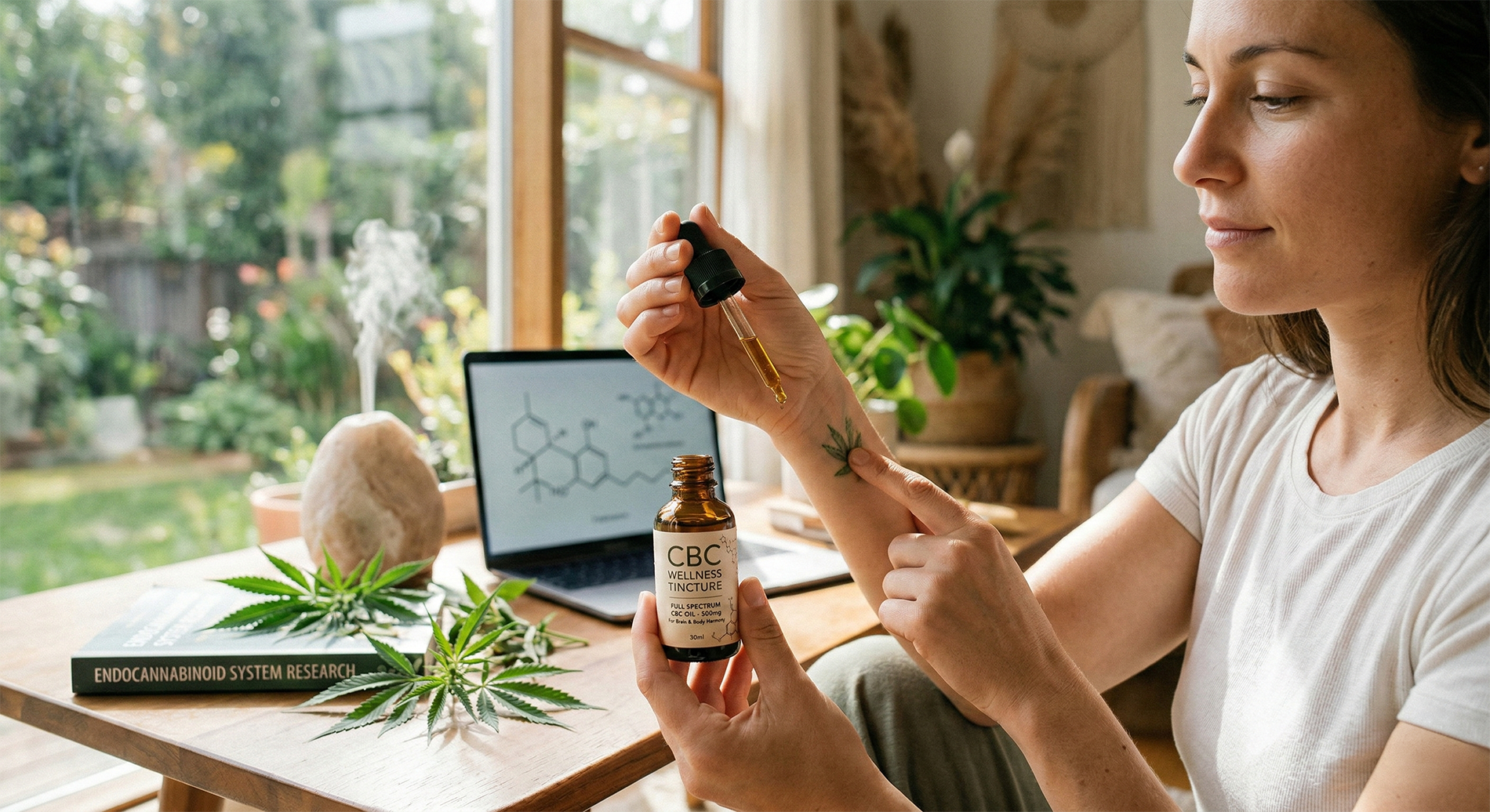
Early research suggests cannabichromene may offer anti‑inflammatory, analgesic, and neuroprotective properties, positioning it as a meaningful contributor to wellness‑focused cannabis formulations. While much of the current evidence comes from laboratory and animal studies, these findings have helped clarify how CBC interacts with the body in ways that differ from both THC and CBD.
One area of particular interest is CBC’s influence on the body’s own endocannabinoids. Research indicates that CBC may help prolong the activity of anandamide, an endocannabinoid often referred to as the body’s “bliss molecule.” By slowing anandamide breakdown, CBC may indirectly support mood balance and overall endocannabinoid tone without producing intoxication. This mechanism helps explain why CBC is often valued as a supporting cannabinoid rather than a primary driver of effects.
Potential Therapeutic Uses of CBC
- Pain & Inflammation — Preclinical studies suggest CBC may reduce inflammatory responses and influence pain signaling pathways. While human data remains limited, CBC is frequently included in multi‑cannabinoid formulations designed to support physical comfort without the psychoactive effects associated with THC.
- Mood & Brain Health — By supporting anandamide signaling and interacting with non‑intoxicating receptor pathways, CBC may offer gentle mood‑supportive effects. It is not a treatment for mental health conditions, but CBC‑rich products are often chosen by consumers seeking balance, clarity, and emotional steadiness as part of a broader wellness routine.
- Skin & Topical Applications — CBC has demonstrated antibacterial and anti‑inflammatory properties in early research, making it a promising candidate for topical formulations. When applied to the skin, CBC may help support localized comfort and skin health without entering the bloodstream in meaningful amounts.
Taken together, these emerging use cases highlight CBC’s role as a refinement cannabinoid, one that subtly enhances how cannabis functions rather than overwhelming the experience. As research continues and formulation techniques evolve, CBC is likely to remain an important component of balanced, whole‑plant cannabis products designed for intentional, everyday use.
Medical Reminder: Research on CBC is ongoing & largely preclinical. Always consult a qualified healthcare professional before using cannabinoids for medical purposes.
HOW CBC IS TYPICALLY CONSUMED
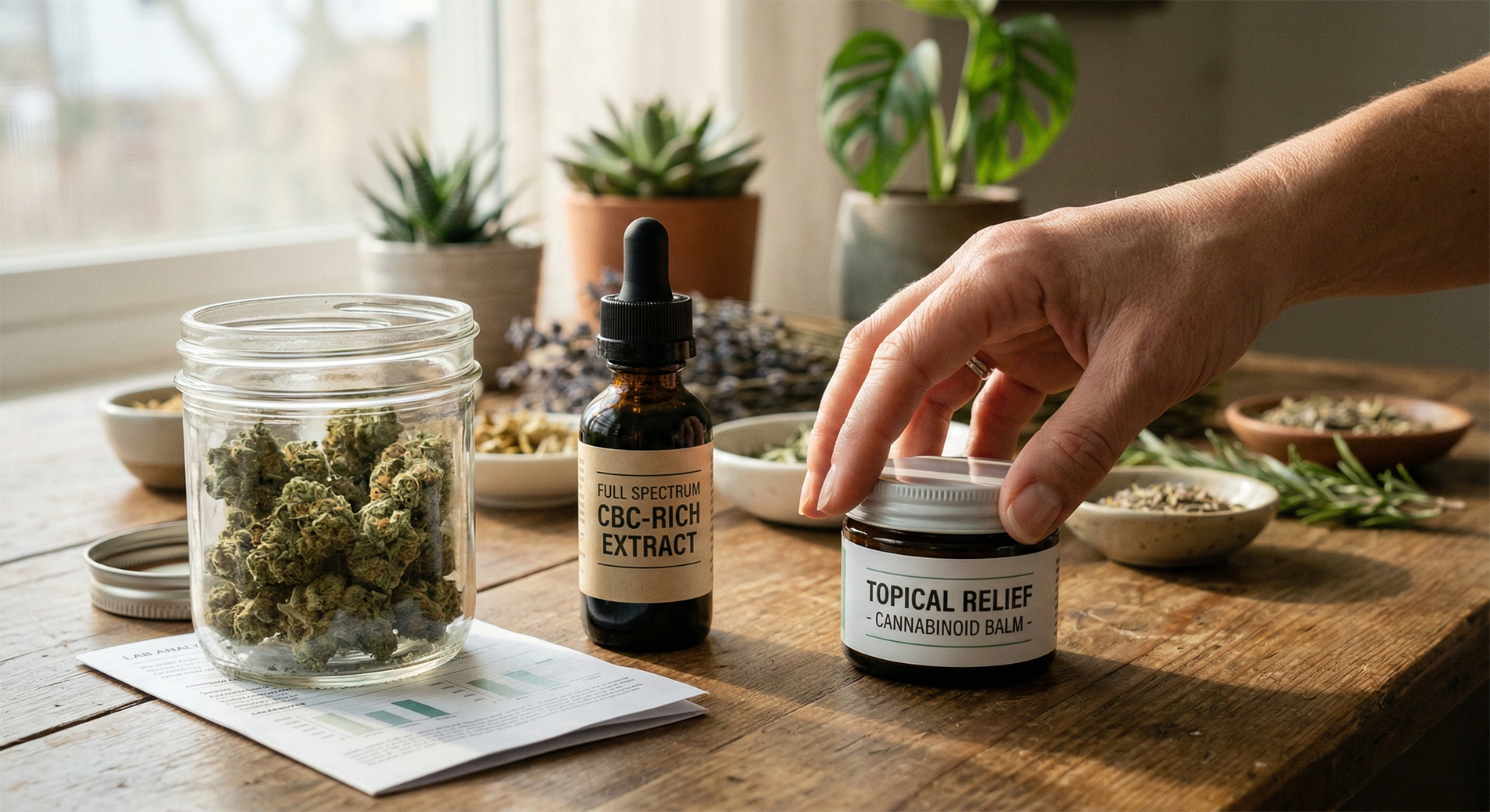
Most consumers encounter cannabichromene as part of a broader cannabinoid profile rather than as a standalone ingredient. Unlike THC or CBD, CBC is rarely isolated or marketed on its own, and its value is most often realized through full‑spectrum or multi‑cannabinoid formulations that emphasize balance and synergy.
CBC is commonly found in:
- Full‑spectrum cannabis flower — Certain cultivars naturally express small but meaningful amounts of CBC alongside THC, CBD, and other minor cannabinoids. In these cases, CBC contributes subtly to the overall character of the flower, influencing how the experience feels rather than defining it outright.
- Broad‑ or full‑spectrum extracts — Oils, cartridges, and concentrates designed for balanced effects often retain CBC as part of a diverse cannabinoid matrix. In these products, CBC may help round out the experience by supporting comfort, clarity, or smoothness without adding intoxication.
- Topicals — Because CBC is non‑intoxicating and interacts with receptors involved in inflammation and skin health, it is sometimes included in creams, balms, and other topical products aimed at targeted, surface‑level relief.
CBC content can vary widely depending on genetics, cultivation practices, and extraction methods. For this reason, lab testing remains the most reliable way to confirm CBC presence and concentration. Certificates of Analysis (COAs) allow consumers to see beyond headline cannabinoids and better understand the full profile of a product, including minor compounds like CBC that may meaningfully shape the experience.
As consumer awareness grows, CBC is increasingly viewed not as a primary driver of effects, but as a refinement cannabinoid, one that enhances how cannabis feels when used thoughtfully and in combination with other plant compounds.
CBC COMPARED TO OTHER MINOR CANNABINOIDS
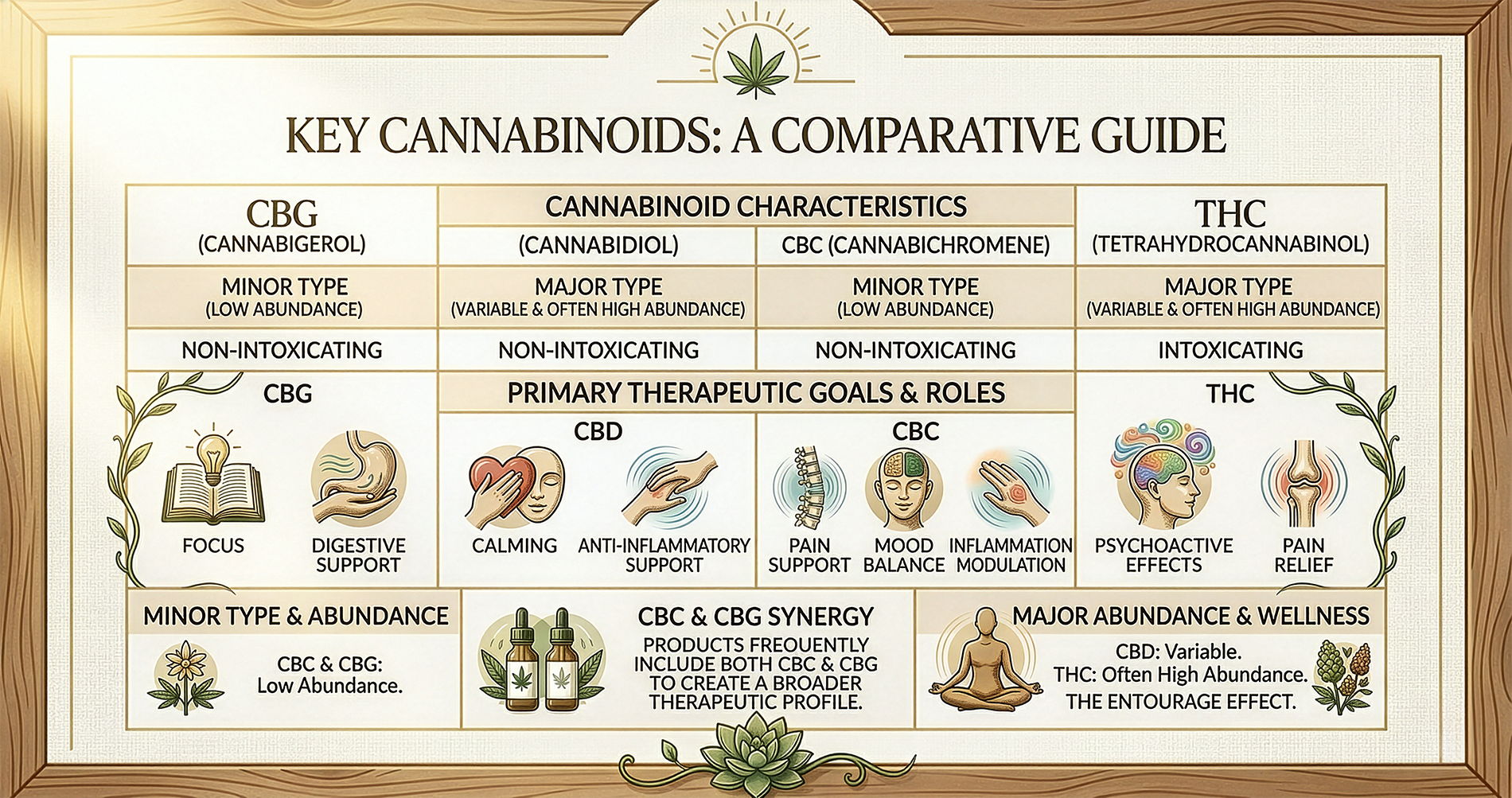
| Category | CBC | CBD | CBG | THC |
|---|---|---|---|---|
| Intoxication | Non‑intoxicating | Non‑intoxicating | Non‑intoxicating | Intoxicating |
| Primary Therapeutic Roles | Pain support, mood balance, inflammation modulation | Calming effects, anti‑inflammatory support | Focus support, digestive support | Psychoactive effects, pain relief |
| Cannabinoid Type | Minor cannabinoid | Major cannabinoid | Minor cannabinoid | Major cannabinoid |
| Typical Abundance | Low | Variable | Low | Often high |
| Common Product Pairings | Often combined with CBG and other cannabinoids | Commonly paired with THC or minor cannabinoids | Often combined with CBC and other cannabinoids | Frequently paired with CBD and minor cannabinoids |
CBC sits alongside other well‑known cannabinoids as part of a broader, more nuanced cannabis profile, and understanding how it compares helps clarify its role. Like CBD and CBG, CBC is non‑intoxicating, meaning it does not produce the psychoactive effects associated with THC. Where these cannabinoids differ is in the goals they tend to support.
- CBC is most often linked to inflammation modulation, pain support, and mood balance, making it a common choice in wellness‑focused and daytime‑friendly formulations.
- CBG, another minor cannabinoid, is more frequently associated with focus and digestive support.
- CBD is widely recognized for its calming and anti‑inflammatory properties.
- THC stands apart as the primary intoxicating cannabinoid, valued for its psychoactive effects and strong pain‑relief potential.
Abundance and classification also help explain how these cannabinoids are used in products. CBC and CBG are considered minor cannabinoids and typically appear in low concentrations, whereas CBD and THC are major cannabinoids with variable to often high abundance depending on the strain. Because of this, CBC is rarely featured alone and is more commonly combined with other cannabinoids. Many products intentionally pair CBC and CBG to create a broader therapeutic profile, while CBD and THC are frequently blended with minor cannabinoids to refine effects and enhance balance. Together, these differences highlight how CBC complements the wider cannabinoid spectrum rather than competing with it, contributing to a more tailored and intentional cannabis experience.
THE FUTURE OF CBC IN CANNABIS
Continued Research on the Benefits of CBC
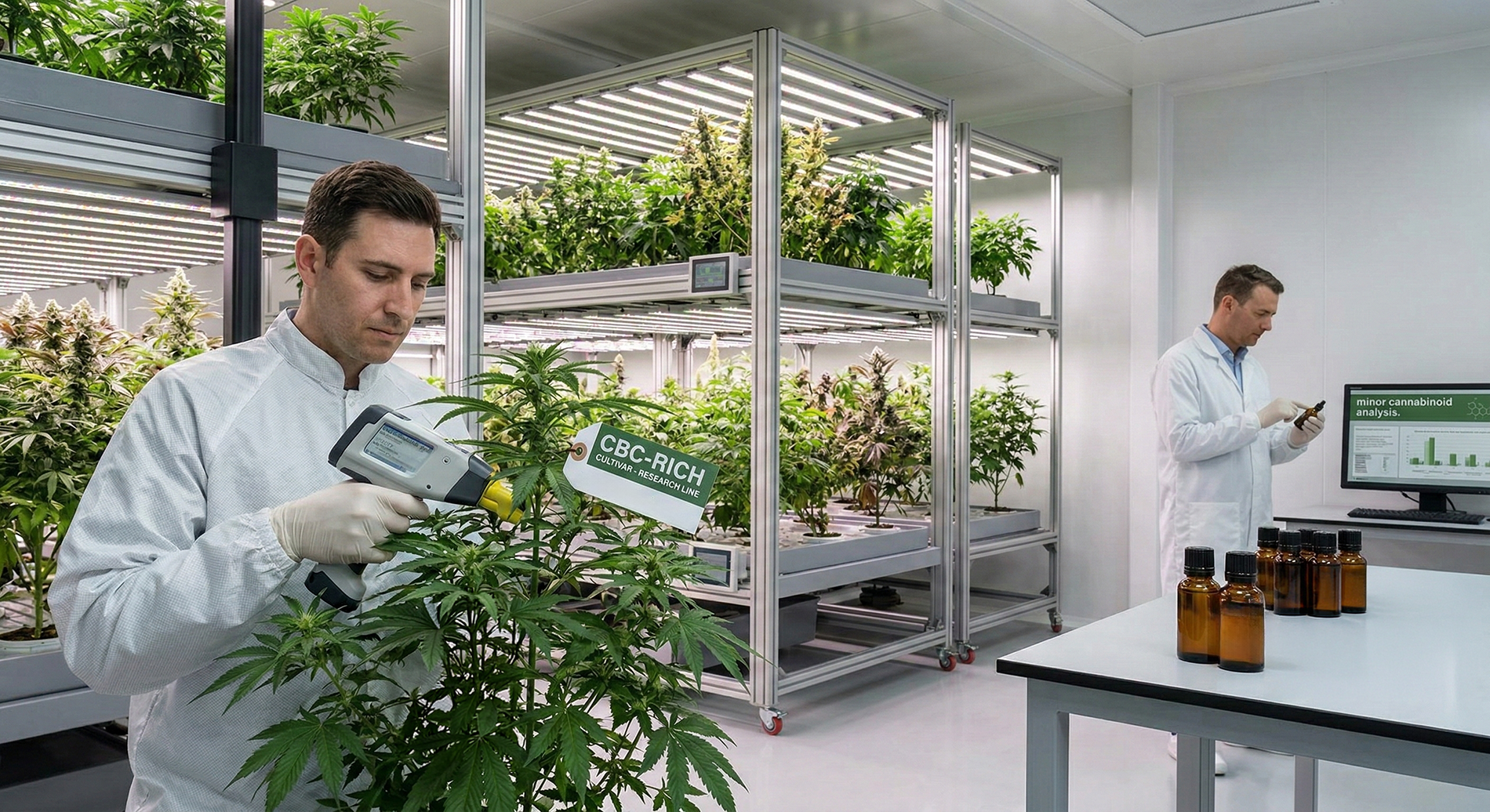
Scientific interest in cannabichromene continues to expand as researchers work to better understand how this lesser‑known cannabinoid interacts with the body. Early studies suggest CBC may influence inflammation pathways, pain signaling, and neurogenesis, particularly through interactions with TRP receptors rather than the CB1 receptors associated with intoxication. While most existing research remains preclinical, these findings have positioned CBC as a promising candidate for further investigation in areas like inflammatory support, mood regulation, and skin health.
As cannabinoid science matures, future research is expected to focus on how CBC behaves in combination with other cannabinoids and terpenes, rather than in isolation. This aligns with a broader shift toward studying whole‑plant cannabis and the entourage effect, where compounds like CBC may subtly enhance or modulate the effects of THC, CBD, and aromatic terpenes. Continued clinical research will be essential for clarifying optimal use cases, safety profiles, and long‑term effects, helping bridge the gap between laboratory findings and real‑world consumer experiences.
Growing Demand for CBC Products
Consumer interest is steadily moving beyond high‑THC products toward cannabis that offers more nuanced, functional effects. As education improves and lab testing becomes more transparent, shoppers are increasingly curious about minor cannabinoids and how they shape the overall experience. In response, breeders and cultivators are selecting genetics with richer, more diverse cannabinoid profiles, including elevated levels of CBC alongside compounds like CBG and CBD.
This trend reflects a broader evolution in cannabis culture, one that values balance, clarity, and intentional use over sheer potency. CBC‑rich flower and full‑spectrum products appeal to consumers seeking daytime‑friendly options, wellness‑oriented formulations, or cannabis that supports comfort without overwhelming psychoactivity. As demand grows, CBC is likely to play a larger role in product differentiation, strain development, and targeted formulations designed for specific effects or lifestyles.
Together, ongoing research and shifting consumer preferences suggest that CBC will continue to gain relevance as cannabis moves toward a more sophisticated, personalized future.
PRACTICAL GUIDANCE FOR CONSUMERS
Navigating minor cannabinoids like CBC is easiest when approached with intention and a bit of curiosity. Because CBC is typically present in smaller amounts and works best as part of a broader cannabinoid profile, informed product selection plays an important role in shaping the experience.
- Review Lab Results Carefully — Certificates of Analysis (COAs) provide the most reliable insight into CBC content, overall cannabinoid balance, and product purity. Looking beyond headline THC or CBD percentages helps reveal whether CBC is meaningfully present and how it fits into the full profile.
- Start Conservatively with New Cannabinoid Profiles — Even non‑intoxicating cannabinoids can influence how cannabis feels. Beginning with lower amounts allows consumers to understand how CBC‑rich products interact with their body before increasing use.
- Choose Full‑Spectrum Formulations When Possible — CBC’s effects are most often expressed through synergy with other cannabinoids and terpenes. Full‑spectrum flower and extracts tend to offer a more balanced, nuanced experience than isolated compounds.
- Be Mindful of Potential Interactions — Cannabinoids may influence how certain medications are metabolized. Anyone using prescription drugs or managing a medical condition should consult a qualified healthcare professional before incorporating new cannabinoid products.
TAKEAWAY:
CBC is a non‑intoxicating cannabinoid that supports balance and wellness, contributing to a refined cannabis experience focused on clarity, comfort, and long‑term, intentional use rather than intensity alone.
As consumer education deepens and product transparency improves, CBC is increasingly valued not for dramatic effects, but for how it subtly shapes the overall feel of thoughtfully crafted cannabis
FAQ: CBC CANNABIS EXPLAINED
What is CBC in cannabis?
Does CBC get you high?
How is CBC different from CBD?
How does CBC compare to CBG?
What are the potential benefits of CBC?
How do people typically consume CBC?
Why is CBC usually found in low amounts?
Is CBC safe to use?
Why are CBC products becoming more popular?
EXPLORE CBC & MORE AT THE HI‑LINE CO.
MONTANA DISPENSARY LOCATIONS
At The Hi‑Line Co., we believe cannabis works best when it’s personal. With dispensary locations across Montana, our knowledgeable teams are here to help you explore the full spectrum of cannabis, including products that feature minor cannabinoids like CBC. Whether you’re curious about balance‑focused flower, full‑spectrum extracts, or wellness‑oriented options, our budtenders take the time to understand what you’re looking for and guide you toward the right fit.
Every Hi‑Line location offers a welcoming, educational environment where questions are encouraged and quality comes first. Stop by one of our dispensaries to learn more about CBC, discover thoughtfully curated products, and find a cannabis experience that aligns with your goals, your lifestyle, and the way you want to feel.
SOURCES & FURTHER READING
The following sources informed the educational content in this article, including cannabinoid definitions, pharmacology, therapeutic research, and the role of CBC within the broader cannabis plant. These references include peer‑reviewed studies, scientific reviews, and established cannabinoid education resources.
-
Sepulveda, D. E., et al. “The Potential of Cannabichromene (CBC) as a Therapeutic Agent.”
Journal of Pharmacology and Experimental Therapeutics (2024).
https://jpet.aspetjournals.org/content/391/2/206 -
Izzo, A. A., et al. “Non‑psychotropic plant cannabinoids: new therapeutic opportunities from an ancient herb.”
Trends in Pharmacological Sciences.
https://www.sciencedirect.com/science/article/pii/S0165614710000955 -
Russo, E. B. “Taming THC: potential cannabis synergy and phytocannabinoid‑terpenoid entourage effects.”
British Journal of Pharmacology.
https://bpspubs.onlinelibrary.wiley.com/doi/10.1111/j.1476-5381.2011.01238.x -
Turner, C. E., Elsohly, M. A., & Boeren, E. G. “Constituents of Cannabis sativa L.: A review of the natural constituents.”
Journal of Natural Products.
https://pubs.acs.org/doi/10.1021/np50076a001 -
National Center for Biotechnology Information (NCBI). Cannabinoid pharmacology and endocannabinoid system research.
https://www.ncbi.nlm.nih.gov/ -
Project CBD. Educational resources on cannabinoids, minor cannabinoids, and the entourage effect.
https://projectcbd.org/ -
Leafly. Cannabinoid reference material and consumer education.
https://www.leafly.com/learn/cannabis-glossary/cbc
This article is intended for educational purposes only and does not replace professional medical advice. Research on minor cannabinoids such as CBC is ongoing, and scientific understanding continues to evolve.